
Westmere · Drainlayer
Drainlayer in Westmere
Before new paving or planting covers an existing drain, send the landscaping plan and any drainage records so its position and condition can be checked.
- PGDB licensed
- Site Safe member
- Impac Prequal assessed
- Kiwi-owned since 2012
How it works
Call or enquire
Phone us or send the address and what you’re seeing.
We assess
A licensed Stately plumber looks at the job on site.
Clear quote
You get a plain explanation and a clear quote before work starts.
Job done and tidied
We finish the work and leave the site clean.
Renewing a damaged section first avoids opening finished work later. Stately covers Westmere. Start with the proposed finished levels, construction dates and photographs showing where the landscaping will cross or cover drainage.
Match the drain route to landscaping
Mark proposed paving, retaining structures, garden beds and large plants on the plan. Include current access covers and any records of previous drain repairs. Tell us which areas must remain usable during construction. The useful question is whether the existing pipe can stay beneath the planned work or needs attention first.
Send available drainage drawings, but treat their routes as a starting point for onsite checking. We compare the proposal with visible connections, access points and surface levels. The landscape designer needs confirmed drain information before fixing details that could obstruct access or place a structure over the pipe.
Locate the pipe before excavation
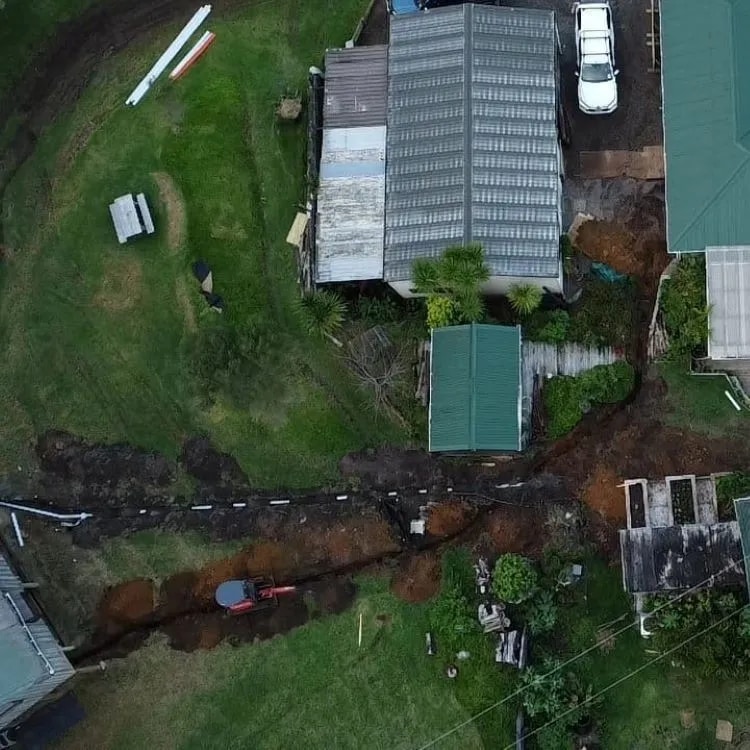
Onsite, we establish which drain serves the affected area, where it runs and how its depth relates to proposed excavation. Known services are checked before digging. Carefully placed exploratory openings can expose the pipe at critical crossings or connections, rather than opening the whole garden on the strength of an old drawing.
Ownership also sets the next step. Owners maintain private pipes, Watercare manages public wastewater, and Auckland Council manages public stormwater. Where planned digging or landscaping structures approach a public wastewater pipe, Watercare approval may be needed. Settle that interface before booking trench excavation or committing to the final landscape layout.
More about drainlayer in Westmere
Agree what needs renewing
Once the affected pipe is exposed and assessed, we discuss the length needing renewal and the connections that must remain. The assessment checks pipe condition, joints, alignment and available fall. A local repair and a longer replacement have different excavation footprints. The scope follows those findings, not simply the size of the landscaping project.
Replacement pipework is laid on prepared bedding, joined to suitable existing sections and arranged to retain necessary access. Changes to the route or levels need checking against the actual drainage requirements. Use MBIE consent guidance to establish whether the proposed work needs consent, with the designer or council resolving project specific questions before construction.
Keep testing ahead of landscape finishes
Plan the drainage excavation before paving foundations, planting and final surface preparation. Identify space for excavated material and a clear route for moving it. Restricted drainlaying belongs with an appropriately authorised person; check the PGDB register when appointing whoever will carry out that part of the job.
Agree the testing and inspection stages before pipework is covered. We check the installed work and complete the testing appropriate to the repair or renewal. Keep trenches accessible for required inspections. Give the landscaper a clear hold point: covering the drain follows those checks, rather than the date booked for laying pavers.
Hand over levels, records and access
Record the renewed route, connection positions and access points before backfilling. Photographs with recognisable reference points help the owner and landscape contractor understand what now lies underground. Include available test and inspection records with the drainage handover, alongside details of the sections repaired or replaced and any retained pipework.
Agree the surface handover in advance. Specify which excavations will be backfilled and what preparation remains for the landscaper. Check access covers against finished levels so they remain reachable after paving or planting. Give the owner the drainage records before the final landscaping hides the trench route.
Drainlayer: questions from Westmere
Should paving wait until the drain is checked?
Yes, where it covers the affected route. Locate and assess the pipe before preparing permanent finishes, then programme any renewal and inspections ahead of paving.
Can we move an access cover into a garden bed?
Have its position and finished level checked onsite. Convenience alone cannot determine whether the proposed arrangement provides suitable drainage access.
What should the landscaper receive after renewal?
Provide the recorded route, access positions, relevant inspection status and agreed backfill levels. Identify remaining surface preparation before the landscaper starts covering the area.
More help in Central Auckland
Read before you call
Google reviews
Rated Excellent
Real words from Auckland customers on Google.
James, came on time. Clean, pleasant. Checked what needed to be done. Worked fast. Good communication
3 / 5