
Onehunga · Drainlayer
Drainlayer in Onehunga
If drainage needs a council inspection, organise the testing and evidence before anyone covers the pipes. Send the approved drainage drawings, consent inspection requirements and photographs of the current work first.
- PGDB licensed
- Site Safe member
- Impac Prequal assessed
- Kiwi-owned since 2012
How it works
Call or enquire
Phone us or send the address and what you’re seeing.
We assess
A licensed Stately plumber looks at the job on site.
Clear quote
You get a plain explanation and a clear quote before work starts.
Job done and tidied
We finish the work and leave the site clean.
Stately covers Onehunga. For an owner or builder, the immediate priority is agreeing which parts must remain exposed, who arranges the inspection and what records must be ready for the inspector.
Set the inspection requirements before excavation
Start with the documents that govern this particular job. Include drawing revisions, relevant consent conditions and any earlier inspection notes. Mark what has already been installed and what remains unfinished. If the work differs from the drawings, raise that difference before setting the inspection date rather than presenting an unexplained change onsite.
Confirm the consent position for the actual installation or repair using MBIE guidance and the council process. Agree the inspection stages with council. Restricted drainlaying must be undertaken by an appropriately authorised person; check the PGDB register for the person doing that work.
Locate the pipework the inspector needs to see
Onsite, we compare the drawings with visible access points and locate the drainage affected by the work. We check connection positions, pipe condition and levels before deciding where excavation is needed. The inspection plan should distinguish a whole new run from a short repair so the exposed area matches the actual scope.
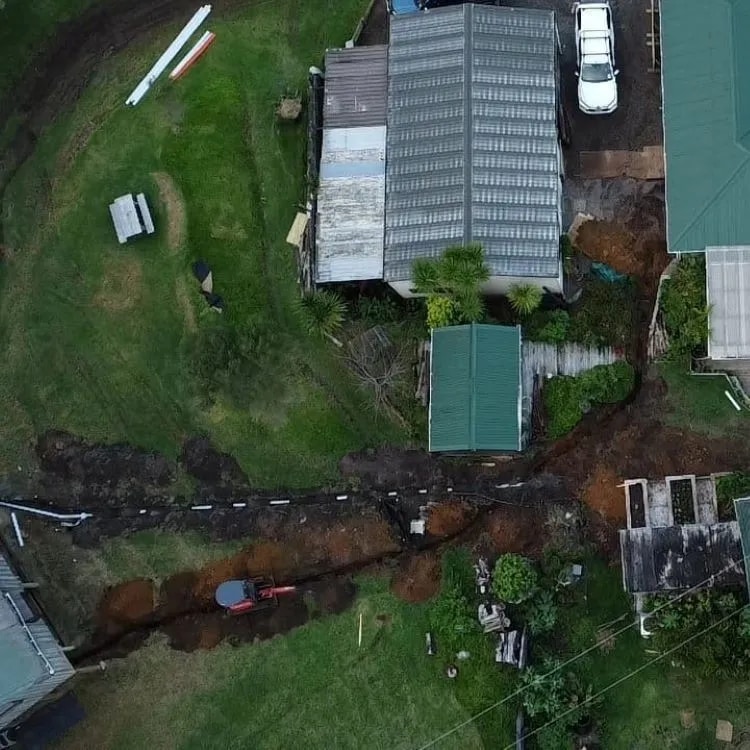
We excavate to expose the joints, branches and connection points needed for installation and inspection. Identify nearby services before digging. Where excavation approaches public wastewater assets, confirm Watercare's works approval requirements first. Keep spoil and stored materials clear of the inspection area, and agree safe access around open trenches.
More about drainlayer in Onehunga
Install the drain with testing access in mind
For a new run, we lay the pipework to the confirmed layout and checked levels. For a repair, we expose the defective section and establish sound pipe for the replacement connections. Bedding, support, junction positions and access provisions are checked as work proceeds. Photographs should show these details before later work obscures them.
Keep the testing sequence alongside the installation sequence. Identify the section being tested, its connection boundaries and the points needed for the agreed test method. Record any onsite departure from the drawings and obtain the necessary direction before proceeding. A photograph alone cannot demonstrate that the drain has passed its required test.
Test and inspect before releasing the trench
We confirm the required test method against the approved documents and inspection requirements. Record the pipe section, test date, method and result. If testing reveals a fault, locate and repair it, then repeat the relevant test. Keep the original result and corrective work linked so the final record explains what happened.
Arrange the council inspection at the agreed stage, with the drawings and test information available. Do not schedule backfilling solely around an expected inspection booking. Confirm the inspection outcome and resolve any recorded items first. Tell the builder which areas can move forward and which must stay accessible for another check.
Close out the records and restore the surface
At handover, provide the drainage layout showing the installed route, connection points and access locations. Include relevant photographs, test results, inspection records and details of completed corrective work. Label records by location so an owner can connect each result to the right pipe rather than receiving an unexplained folder of images.
Once the required checks permit covering, we backfill and complete the agreed surface reinstatement. Specify whether the finish is soil, gravel or another agreed surface, and identify any separate finishing work. Keep drain access points accessible. Give the owner a clear list of outstanding documentation or surface work, with responsibility assigned.
Drainlayer: questions from Onehunga
What if the drain has already been covered?
Send photographs, drawings and any test records. Confirm with the inspector what evidence is acceptable and which sections need exposing before arranging excavation.
Can the builder book paving immediately after testing?
Base paving on the inspection outcome, not just the test result. Confirm that outstanding inspection items are resolved and the trench is ready for reinstatement.
What should a failed test record include?
Identify the affected section, observed fault, repair and repeat test result. Keep these together with the inspection outcome so the completion record follows the work.
More help in Central Auckland
Read before you call
Google reviews
Rated Excellent
Real words from Auckland customers on Google.
James, came on time. Clean, pleasant. Checked what needed to be done. Worked fast. Good communication
3 / 5