
Milford · Drainlayer
Drainlayer in Milford
For a cross-lease drainage problem, start by sending the property plan, available drainage drawings and a description of which homes are affected.
- PGDB licensed
- Site Safe member
- Impac Prequal assessed
- Kiwi-owned since 2012
How it works
Call or enquire
Phone us or send the address and what you’re seeing.
We assess
A licensed Stately plumber looks at the job on site.
Clear quote
You get a plain explanation and a clear quote before work starts.
Job done and tidied
We finish the work and leave the site clean.
A shared pipe needs a shared work plan before excavation begins. Stately covers Milford. We first check how the drains connect onsite, then define the repair area, access arrangements and interruptions so owners can agree on a practical scope before surfaces are opened.
Put the shared information together
Send photos of visible access points, the affected fixtures and the proposed digging area. Include any previous repair records and identify which household noticed the problem first. Tell us whether symptoms occur in one home or several, and whether another owner holds drawings. These details guide the investigation rather than determine the fault.
Nominate a contact for each affected home. Before booking excavation, agree who will coordinate access, communicate decisions and receive records. Keep approval of the physical work separate from any discussion about dividing costs. The drain route alone is not a basis for allocating a shared bill.
Trace the connections before choosing the trench
Onsite, we check accessible drainage points and trace the branches serving each dwelling. We compare their positions with supplied drawings and establish the section needing repair or replacement. The useful outcome is a marked route showing which branches must stay connected and where excavation will expose the suspected defect.
Private pipes remain an owner maintenance responsibility, while Watercare manages public wastewater pipes. A drain serving several homes is not automatically public. Confirm that boundary before settling the work scope. For excavation near a public wastewater asset, check Watercare's approval requirements before deciding where digging or pipe installation can proceed.
More about drainlayer in Milford
Plan access and open the agreed area
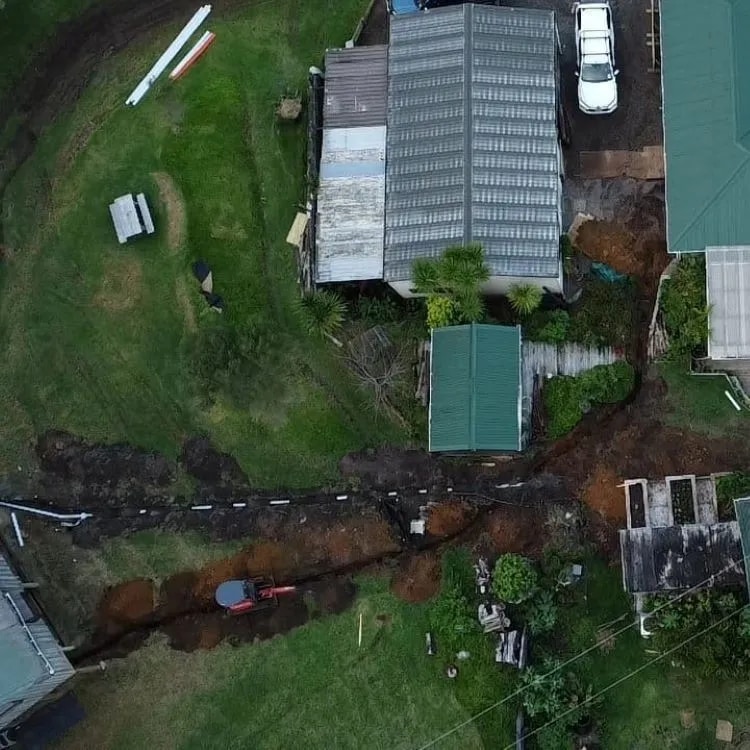
Walk the proposed trench with the owners or builder. Identify gates, parking spaces, paths and entrances that need to remain usable. Agree where excavated material will sit and how residents will pass the work area safely. Record existing paving and garden edges so the reinstatement scope is clear before excavation.
Locate other services before digging, then expose the relevant connections carefully. Check actual pipe depth, condition and junction positions against the proposed repair. Discuss any change in the exposed scope before extending the trench. MBIE consent guidance informs the consent check for that scope, with council confirmation where needed.
Repair the shared run in a controlled sequence
The exposed pipework determines whether a local repair or a longer replacement is appropriate. We check sound connection points, levels, support and the arrangement of incoming branches before laying pipe. Preserve the intended connection from each home and provide suitable access for future maintenance as established through the onsite assessment.
Agree the wastewater interruption with every household using the affected run. Set out when connected fixtures must remain unused and how residents will hear that service is restored. Restricted drainlaying must be undertaken by an appropriately authorised person. Owners can check the person's drainlaying authorisation through the PGDB register before work starts.
Hold the trench open for checks and records
Arrange required inspections within the programme before covering the pipe. Test the installed or repaired section and check flow from the affected branches. Keep junctions accessible for those checks. Backfilling follows the relevant testing and inspection stages, rather than a paving booking driving the sequence.
At handover, provide a marked pipe route, photographs before covering, test records and applicable inspection documentation. Give affected owners the same information, including access point locations. Record what was repaired and what remains existing. Reinstate the agreed surfaces and note any finishing work assigned to another contractor.
Drainlayer: questions from Milford
What if only one home has symptoms?
Report that first. We check its branch and the shared connection onsite before deciding where repair work belongs.
Should every owner receive the drainage records?
Give each affected owner a copy. Shared records make later repairs easier to plan and help keep access points findable.
Can paving follow immediately after pipe installation?
Book it after the testing, required inspections and backfilling stages are coordinated. Photograph the exposed connections before covering them.
More help in North Shore
Read before you call
Google reviews
Rated Excellent
Real words from Auckland customers on Google.
Thomas was professional, fast and efficient. He explained things clearly, and honestly. We were about to leave for the South Island for the weekend, Thomas made sure the job was completed in good order before we left. He also checked-in with us periodically to ensure there were no further issues.
2 / 5