
Mellons Bay · Drainlayer
Drainlayer in Mellons Bay
If a drain repair will cross your lawn, path or paving, plan the surface reinstatement before excavation starts. Send photos of the proposed route, existing finishes and access, together with any drainage plans.
- PGDB licensed
- Site Safe member
- Impac Prequal assessed
- Kiwi-owned since 2012
How it works
Call or enquire
Phone us or send the address and what you’re seeing.
We assess
A licensed Stately plumber looks at the job on site.
Clear quote
You get a plain explanation and a clear quote before work starts.
Job done and tidied
We finish the work and leave the site clean.
Stately covers Mellons Bay. We start by checking the pipework and agreeing what needs opening, what materials can be retained, and who will complete each part of the reinstatement.
Record the surface before opening the trench
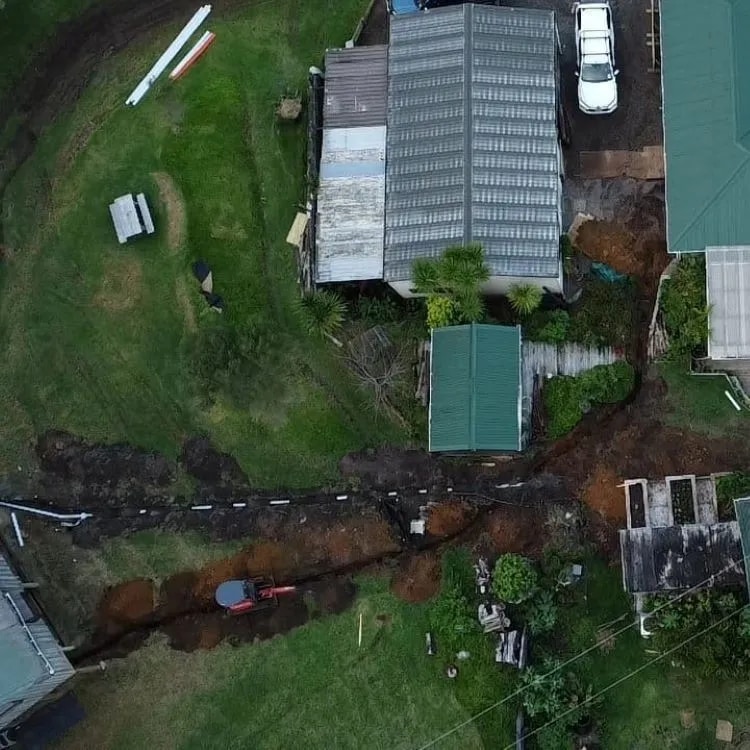
Photograph the whole working area, then capture paving patterns, path edges, cracks and changes in level. Send details of gates, steps and anything that restricts access. Tell us whether the route is used for deliveries or daily entry. These details help define the work area and a usable access arrangement.
Agree the finish in writing before digging. Separate drain excavation and backfill from topsoil, turf, concrete or paving work. Name the person responsible for each stage. Record whether lifted pavers will be reused and where they will be stored. Replacement materials should be selected before the trench interrupts the path.
Locate the drain and set excavation limits
Onsite, we check the drain route, available access points and nearby services against the information supplied. The repair position and pipe depth determine the excavation, not the width of a visible crack above it. We also check space for spoil, retained paving and machinery movement so the surrounding finish is protected.
Mark the opening with the reinstatement in mind. A concrete cut needs an agreed edge, while paving needs enough working room to rebuild its support. Building or excavation near public wastewater pipes may require Watercare approval. Resolve that requirement before setting the digging programme, rather than treating a plan as permission.
More about drainlayer in Mellons Bay
Repair the pipe before rebuilding its cover
Once the drain is exposed, we check its condition, alignment, bedding and connection points. Those findings establish the repair extent. The work can involve replacing a damaged section or laying the agreed replacement route. Pipe selection and levels are settled onsite or through the drainage design, not from surface photographs.
The new pipework needs suitable support and sound joints before any surface work starts. Restricted drainlaying must be undertaken by an appropriately authorised person; check the PGDB register when arranging the job. For this repair, consent planning follows the actual scope and MBIE guidance, including any change from the original proposal.
Keep inspection ahead of backfill and finishes
Programme testing and any required inspection while the relevant pipework remains accessible. Agree the inspection arrangements before booking the surface contractor. We check the installed work using the test appropriate to the job and record the result. Covering connections early creates avoidable reopening and delays the finished path or lawn.
After testing and inspection requirements are satisfied, backfill proceeds in a controlled sequence. Keep suitable excavated material separate from unsuitable spoil. Pipe surround and trench fill have different roles; neither should be treated as a place to bury broken concrete. Coordinate fill placement and compaction with the planned surface construction.
Hand over the trench and finished surface clearly
For lawns, agree the topsoil and grass finish, then explain watering and when the area can be used. For paving, check the rebuilt base, pattern, joints and edge restraint. For concrete paths, agree finish, joints and curing access with the surface contractor. Check final levels against adjoining surfaces and drainage inlets.
At handover, record whether the area is fully finished or awaiting a named contractor. Provide photographs of exposed pipework, the repaired route, test results and applicable inspection records. Note access points that must remain reachable. Include surface care instructions and outstanding tasks, so reinstatement has a clear endpoint rather than an assumed one.
Drainlayer: questions from Mellons Bay
Should I order new pavers before excavation?
First confirm the opening and inspect retained pavers. Then agree replacements and quantities with whoever will relay them.
Can the path be finished before inspection?
Keep required inspection points accessible. Coordinate testing, inspection and backfill before committing to the final surface booking.
What if only backfill is included?
Record the handover level, remaining surface layers and responsible contractor. Keep the unfinished area protected until reinstatement is complete.
More help in East Auckland
Read before you call
Google reviews
Rated Excellent
Real words from Auckland customers on Google.
Thomas was professional, fast and efficient. He explained things clearly, and honestly. We were about to leave for the South Island for the weekend, Thomas made sure the job was completed in good order before we left. He also checked-in with us periodically to ensure there were no further issues.
2 / 5