
Red Beach · Drainlayer
Drainlayer in Red Beach
If an outdoor room will cover an existing stormwater pipe, settle the drainage route before setting out foundations. Send the proposed footprint, foundation drawings, downpipe positions and any drainage records first.
- PGDB licensed
- Site Safe member
- Impac Prequal assessed
- Kiwi-owned since 2012
How it works
Call or enquire
Phone us or send the address and what you’re seeing.
We assess
A licensed Stately plumber looks at the job on site.
Clear quote
You get a plain explanation and a clear quote before work starts.
Job done and tidied
We finish the work and leave the site clean.
Stately covers Red Beach. We check how the affected pipe collects and carries water, then coordinate its relocation with the building work so connections and maintenance access remain practical.
Start with the footprint and connections
Mark which parts of the outdoor room are roofed and show any new roof drainage on the drawings. Include posts, footing locations, finished floor levels and proposed paving. A pipe that clears the wall line could still conflict with a footing, so the foundation layout matters as much as the room outline.
Tell us whether existing downpipes stay or move. The designer needs to confirm how additional roof water fits the drainage arrangement. Consent requirements depend on the actual alterations. Use MBIE guidance with the project designer and council to settle the approval pathway before the excavation programme is fixed.
Locate the pipe before choosing its replacement route
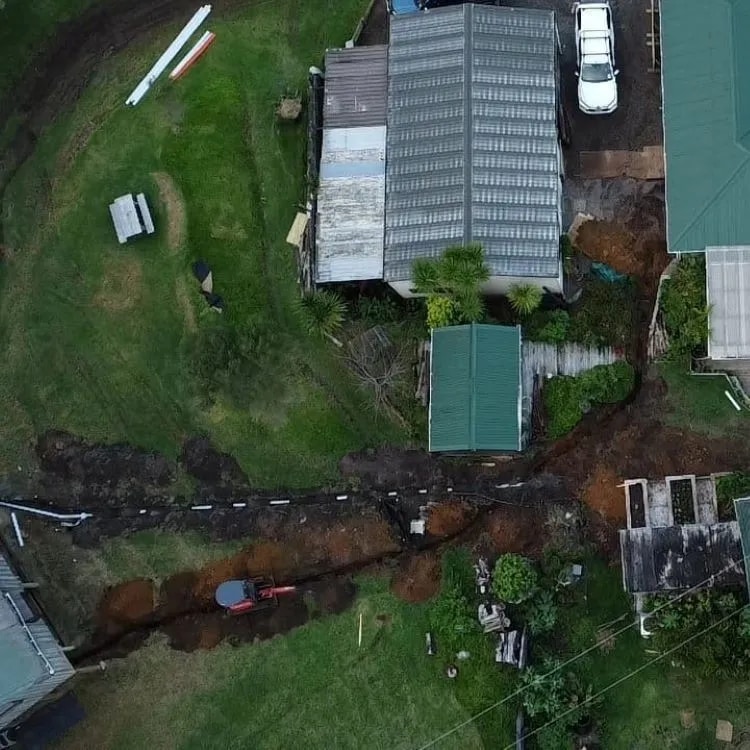
Existing plans provide a starting point. Onsite, we trace the affected run, check accessible chambers and locate services around the proposed trench. Targeted excavation exposes connection points so pipe material, condition, depth and direction can be checked. These findings inform the route rather than forcing the pipe around a drawing.
Confirm where private drainage ends and public assets begin. Owners maintain private pipes, while Auckland Council manages public stormwater. If foundations or excavation approach a Watercare asset, its approval requirements need checking before work proceeds. Keep these boundaries on the working plan so a stormwater alteration stays within its agreed scope.
More about drainlayer in Red Beach
Sequence digging around the building work
Agree which drainage work must precede footings and which connections depend on later roof construction. Set aside a trench corridor clear of stored framing and building materials. Plan where excavated material goes and which paths remain usable. Record the existing lawn, paving or concrete finish before disturbing it.
Open only the area needed for the agreed relocation and connections. Near foundations, coordinate excavation with the builder and designer so support is addressed before digging. Decide how existing downpipes will discharge during the changeover. Keep loose soil and construction debris out of open pipe ends, and arrange the cutover before removing the working run.
Lay and check the diverted run
Lay the replacement pipe on prepared bedding along the checked route. Confirm levels onsite, connect the retained downpipes and provide the access points established in the design. Use joints suited to the pipe materials at each connection. Remove redundant sections or close abandoned ends as agreed, recording what remains underground.
Restricted drainlaying must be carried out by an appropriately authorised person; check authorisation through the PGDB register. Schedule the relevant drainage tests and required inspections before concealment. Leave joints and connections available for those checks. Coordinate backfilling with inspection acceptance rather than letting the footing pour or paving date dictate when pipes disappear.
Finish with usable access and clear records
After checks are complete, backfill around the pipe and reinstate the disturbed area to the agreed scope. Specify whether that means prepared ground, replaced paving or another finish. Coordinate final surface levels with the outdoor room so access covers remain reachable rather than buried beneath decking or landscaping.
At handover, provide a marked drainage route, connection locations, useful photographs and available test and inspection records. Note any remaining surface work assigned to the builder. Walk through access points and confirm which downpipes feed the relocated run before furniture or permanent finishes obscure the area.
Drainlayer: questions from Red Beach
Can the pipe stay beneath the outdoor room?
That needs an onsite check against foundation positions, pipe condition and future access. Have the designer resolve structural conflicts before choosing retention or relocation.
When should the builder book the footings?
Coordinate footings after the route and excavation sequence are agreed. Include time for exposed drainage checks and required inspections before covering connections.
Should paving be included in the drainage brief?
Yes. Send the proposed finish and levels. Agree who reinstates each disturbed surface and keep drainage access clear in the final layout.
More help in Hibiscus Coast
Read before you call
Google reviews
Rated Excellent
Real words from Auckland customers on Google.
I had the team come out to install a gas hot water system for me recently and it was an absolute pleasure to have these guys come out and do some work for me. The response time from me requesting the work, to the work being completed, was the best I have ever had! They showed up on time, the communication was great, they are super efficient and they did a top quality job! Couldn't ask for anything more. Highly recommend these guys!
1 / 5