
Beachlands · Drainlayer
Drainlayer in Beachlands
Connecting a water tank overflow starts with checking where the receiving stormwater pipe runs and whether the proposed connection is suitable.
- PGDB licensed
- Site Safe member
- Impac Prequal assessed
- Kiwi-owned since 2012
How it works
Call or enquire
Phone us or send the address and what you’re seeing.
We assess
A licensed Stately plumber looks at the job on site.
Clear quote
You get a plain explanation and a clear quote before work starts.
Job done and tidied
We finish the work and leave the site clean.
Send photographs of the tank, its overflow outlet and the ground between it and any known drainage points. Include the tank instructions and available drainage plans. Stately Plumbing covers Beachlands. These details help prepare for an onsite assessment before anyone orders pipe or opens a trench.
Define the overflow connection before digging
Show us which outlet is the overflow, where it currently discharges and whether the tank is already installed. Include photographs with enough surrounding detail to show fences, paving and access. For a proposed tank, send its intended position and the supplier's outlet details rather than marking a trench route yourself.
We check the outlet level, available drainage fall and receiving pipe onsite. The route must suit the tank arrangement as well as the property drainage. Confirm any detention or retention function with the designer, together with applicable council requirements, before changing outlets or connecting additional pipework.
Locate the receiving drain and establish responsibility
A nearby lid or grate is a starting point for investigation, not proof of a suitable connection. We locate the relevant drainage, check accessible pipework and compare what is found with supplied plans. The connection point, depth and condition determine whether an overflow pipe can follow the proposed route.
Owners maintain private pipes. Auckland Council manages public stormwater, while Watercare manages public wastewater. The overflow connection is assessed against the stormwater system, not selected by proximity to a wastewater pipe. Building or excavation near Watercare assets may require Watercare approval. Establish that boundary before setting the excavation programme.
More about drainlayer in Beachlands
Plan excavation around the tank and access
Once the route is established, agree which paving, garden areas or other surfaces will be opened. Check other services along the trench and protect the tank base from disturbance. Discuss access for excavation, temporary storage of spoil and how people will reach doors while the ground is open.
Consent requirements depend on the actual work. Use MBIE guidance and confirm the approval pathway before starting. Restricted drainlaying requires an appropriately authorised person, whose authorisation can be checked through the PGDB register. Agree inspection stages at this point so the trench remains accessible when the work needs to be viewed.
Lay the overflow pipe and inspect exposed work
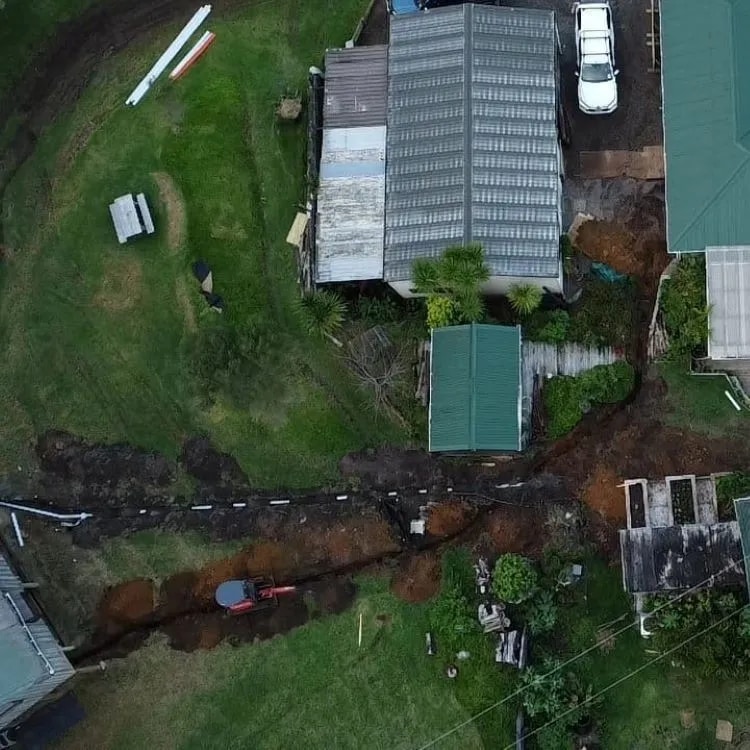
We excavate to expose the agreed receiving pipe and prepare the trench for the new overflow line. Onsite levels and the confirmed design determine the pipe arrangement. Bedding supports the pipe along its route. Joints, changes of direction and the tank outlet connection are completed before the line is covered.
Any damaged receiving pipe exposed at the junction is assessed before connection. Agree repairs or replacement needed there rather than burying a damaged junction. Testing checks flow through the new line and the completed joints using the appropriate method. Required inspections fit between installation and backfilling, with access kept clear for viewing.
Record the buried route and finish the surface
Photograph the pipework before backfilling and record its route against fixed features such as the tank base and building corners. Keep connection details, test results and relevant inspection records together. Record any agreed change from the original route so future excavation is based on the installed work.
Backfill and reinstate the disturbed area to the agreed scope. Confirm whether paving replacement, concrete finishing or planting is included or assigned to another contractor. At handover, show the owner the overflow connection and accessible maintenance points. Keep tank instructions with the drainage records for future outlet changes or tank replacement.
Drainlayer: questions from Beachlands
Can the overflow connect to the nearest downpipe?
The receiving pipe, levels and drainage arrangement need checking onsite. A nearby downpipe alone is insufficient to select the connection.
Should I install the tank before arranging drainage?
Send the proposed position and outlet details first. Coordinating the base, outlet level and drain route avoids fixing the tank in an unsuitable position.
Can the trench be filled immediately after installation?
Keep it open until the planned testing and required inspections are complete. Confirm that stage before booking surface reinstatement.
More help in East Auckland
Read before you call
Google reviews
Rated Excellent
Real words from Auckland customers on Google.
Thomas was professional, fast and efficient. He explained things clearly, and honestly. We were about to leave for the South Island for the weekend, Thomas made sure the job was completed in good order before we left. He also checked-in with us periodically to ensure there were no further issues.
2 / 5